
Incisional Hernia Repair Mumbai
Home > Incisional Hernia Repair Mumbai
Incisional Hernia Repair Mumbai – Advanced Surgical Treatment
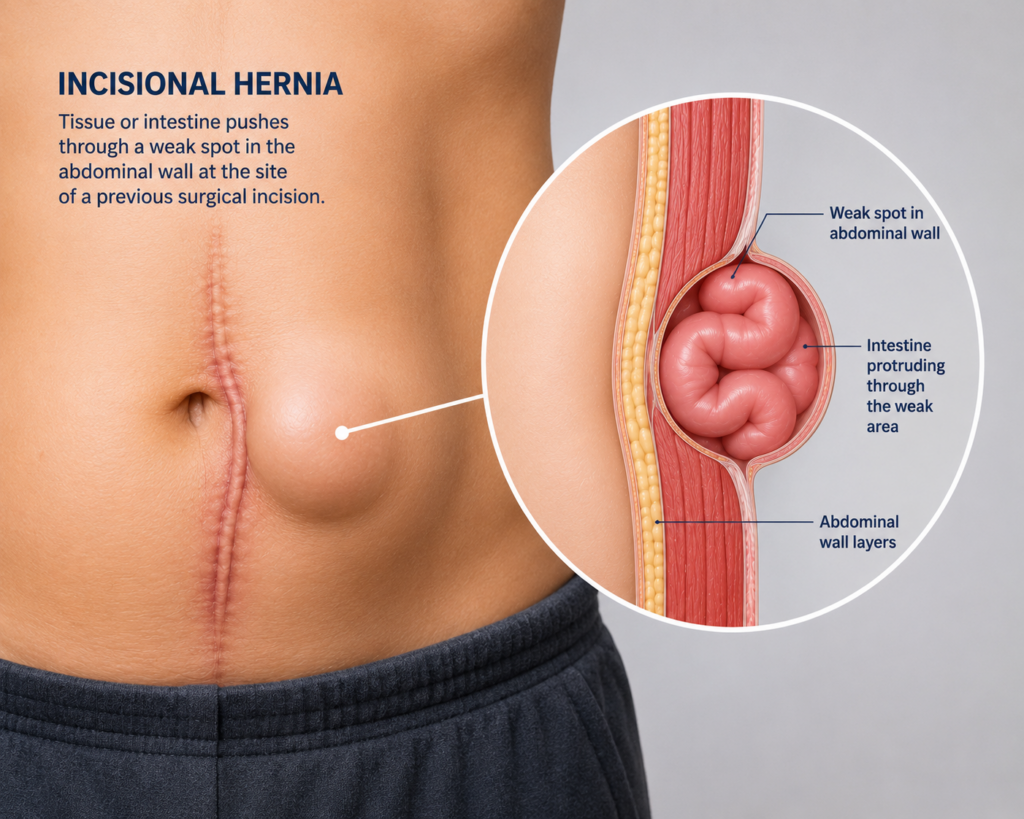
An incisional hernia is a condition that develops when tissue or part of an internal organ pushes through a weakened area of the abdominal wall where a previous surgical incision has healed. Although many surgical wounds heal well, some patients may develop weakness in the muscles over time, leading to a visible bulge or discomfort. Early diagnosis helps prevent the hernia from becoming larger and supports timely treatment. Incisional Hernia Repair Mumbai is a surgical solution designed to restore the strength of the abdominal wall while improving comfort and daily movement.
Understanding an Incisional Hernia
Every abdominal surgery requires an incision through the muscles and surrounding tissues. As the body heals, scar tissue forms to close the opening. In some people, the repaired area may gradually weaken due to several factors, allowing abdominal tissue to protrude through the defect.
An incisional hernia may appear months or even years after surgery. Initially, it may only be noticeable while standing, coughing, or lifting heavy objects. As time passes, the bulge may become larger and cause discomfort during routine activities.
Although small hernias may not cause severe symptoms, delaying treatment can increase the risk of complications such as bowel obstruction or tissue becoming trapped within the hernia.
What Causes an Incisional Hernia?
Several factors can contribute to weakening of the abdominal wall after surgery.
Previous Abdominal Surgery
Any operation involving an abdominal incision may increase the possibility of developing an incisional hernia. The risk varies depending on the size and location of the incision and individual healing patterns.
Wound Healing Problems
Poor wound healing due to infection, diabetes, nutritional deficiencies, or smoking can reduce the strength of the surgical scar and increase the likelihood of hernia formation.
Increased Pressure on the Abdomen
Repeated strain from obesity, chronic coughing, constipation, pregnancy, or heavy lifting places additional pressure on the abdominal wall. Over time, this pressure may cause the weakened area to stretch and allow tissue to protrude.
Other contributing factors include:
- Multiple abdominal surgeries
- Advancing age
- Poor muscle strength
- Chronic lung disease
- Long-term steroid medication
- Family history of connective tissue weakness
Understanding these risk factors allows patients to seek evaluation before symptoms worsen.
Common Symptoms
Symptoms vary depending on the size and location of the hernia. Some patients notice only a small swelling, while others experience increasing discomfort during daily activities.
Common symptoms include:
- A visible bulge near a previous surgical scar
- Pain while standing for long periods
- Discomfort during coughing or lifting
- Pulling sensation around the incision
- Feeling of heaviness in the abdomen
- Swelling that becomes more noticeable throughout the day
Large hernias may interfere with walking, exercise, or routine work. In rare situations, severe pain, vomiting, or inability to push the bulge back may require urgent medical attention.
Diagnosis and Evaluation
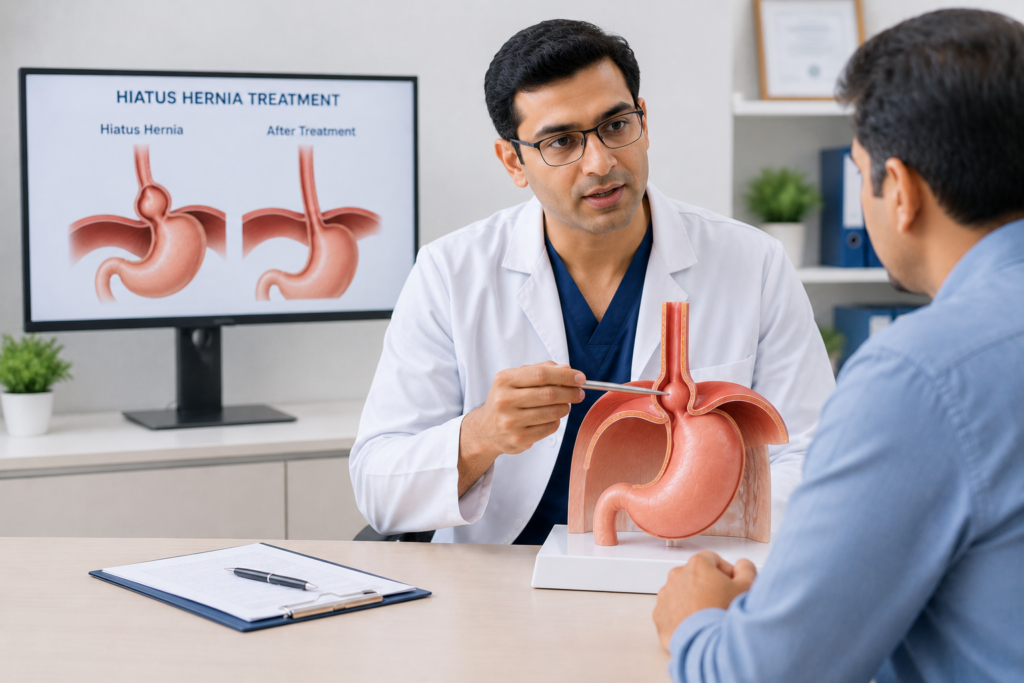
Diagnosis usually begins with a detailed medical history and physical examination. During the consultation, the surgeon evaluates the location, size, and characteristics of the swelling.
Additional investigations may include:
- Ultrasound
- CT scan
- MRI (when required)
- Routine blood investigations before surgery
These tests help determine the exact size of the defect and assist in planning the most appropriate surgical approach.
The choice of treatment depends on several factors, including the patient’s age, medical history, previous surgeries, and the complexity of the hernia.
Treatment Options
Modern hernia treatment focuses on repairing the weakened abdominal wall while reducing discomfort and supporting long-term recovery.
Open Repair
This traditional approach involves repairing the weakened muscle through an incision over the hernia. Mesh reinforcement may be used to strengthen the abdominal wall and reduce recurrence.
Laparoscopic Repair
For selected patients, Incisional Hernia Surgery Mumbai can be performed using minimally invasive laparoscopic techniques through small incisions. This approach often results in reduced postoperative discomfort, shorter hospital stays, and quicker recovery for suitable cases.
Laparoscopic Repair
Robotic-assisted surgery is another minimally invasive option for selected patients with complex or recurrent incisional hernias. The robotic platform gives the surgeon a magnified three-dimensional view and improved instrument control, allowing precise repair of the abdominal wall. The choice between open, laparoscopic, and robotic surgery depends on the size of the hernia, previous surgeries, overall health, and clinical findings.
Recovery After Surgery
Recovery varies from person to person and depends on the type of procedure performed. Most patients are encouraged to start walking within a few hours after surgery, as gentle movement supports circulation and reduces the risk of complications.
General recovery recommendations include:
- Walk several times a day as advised.
- Avoid lifting heavy objects during the healing period.
- Eat a balanced diet rich in protein to support tissue repair.
- Stay hydrated and prevent constipation.
- Keep the surgical wound clean and dry.
- Attend scheduled follow-up appointments.
Many patients gradually return to office work within one to two weeks after minimally invasive surgery, while physically demanding jobs may require a longer recovery period. Following the surgeon’s advice helps achieve better healing and lowers the chance of recurrence.
Why Early Treatment Matters
An incisional hernia does not usually heal on its own. Over time, the weakness in the abdominal wall may become larger, making the repair more complex. Early treatment often allows surgery before complications develop and can improve long-term outcomes.
Seeking Incisional Hernia Repair Mumbai at the right time helps restore the strength of the abdominal wall, improve daily comfort, and reduce the likelihood of emergency situations such as bowel obstruction or strangulation.
A timely evaluation by a qualified Hernia Specialist in Mumbai also helps determine whether surgery is needed immediately or whether the condition can be monitored safely for a period of time.
Living Well After Hernia Repair
Long-term success after hernia surgery depends not only on the operation but also on healthy lifestyle habits. Maintaining a healthy body weight, avoiding smoking, treating chronic cough, managing constipation, and strengthening the abdominal muscles after complete healing can reduce strain on the repaired area.
Patients should also follow lifting precautions during recovery and gradually resume physical activities according to medical advice. Regular follow-up visits help monitor healing and ensure the abdominal wall remains strong over time.
Conclusion
An incisional hernia can affect comfort, mobility, and overall quality of life if left untreated. Modern surgical techniques allow effective repair while supporting quicker recovery and improved abdominal wall strength. Incisional Hernia Repair Mumbai combines careful evaluation with individualized treatment planning, helping patients return to their normal routine safely. Early diagnosis, appropriate surgical management, and proper post-operative care remain the key factors in achieving successful long-term results.
Frequently Asked Questions
What is an incisional hernia?
An incisional hernia develops when tissue pushes through a weakened area of the abdominal wall at the site of a previous surgical incision. It may appear months or years after surgery.
When should an incisional hernia be treated?
Treatment is recommended if the hernia causes pain, continues to increase in size, interferes with daily activities, or carries a risk of complications. Early evaluation helps determine the most appropriate treatment.
Is mesh always used during incisional hernia repair?
Mesh is commonly used to strengthen the abdominal wall and reduce the risk of recurrence. However, the decision depends on the size of the hernia, tissue quality, and the surgeon’s clinical assessment.
How long does recovery take after incisional hernia surgery?
Recovery varies depending on the surgical approach and the patient’s overall health. Many patients return to light daily activities within a few weeks, while complete recovery may take longer for larger or more complex repairs.
Can an incisional hernia come back after surgery?
Although modern surgical techniques significantly reduce recurrence, factors such as obesity, smoking, chronic cough, infection, and heavy lifting before complete healing may increase the risk. Following post-operative instructions supports better long-term outcomes.