
Hiatus Hernia Specialist in Mumbai
Home > Hiatus Hernia Specialist in Mumbai
Hiatus Hernia Specialist in Mumbai for Advanced Hernia Care
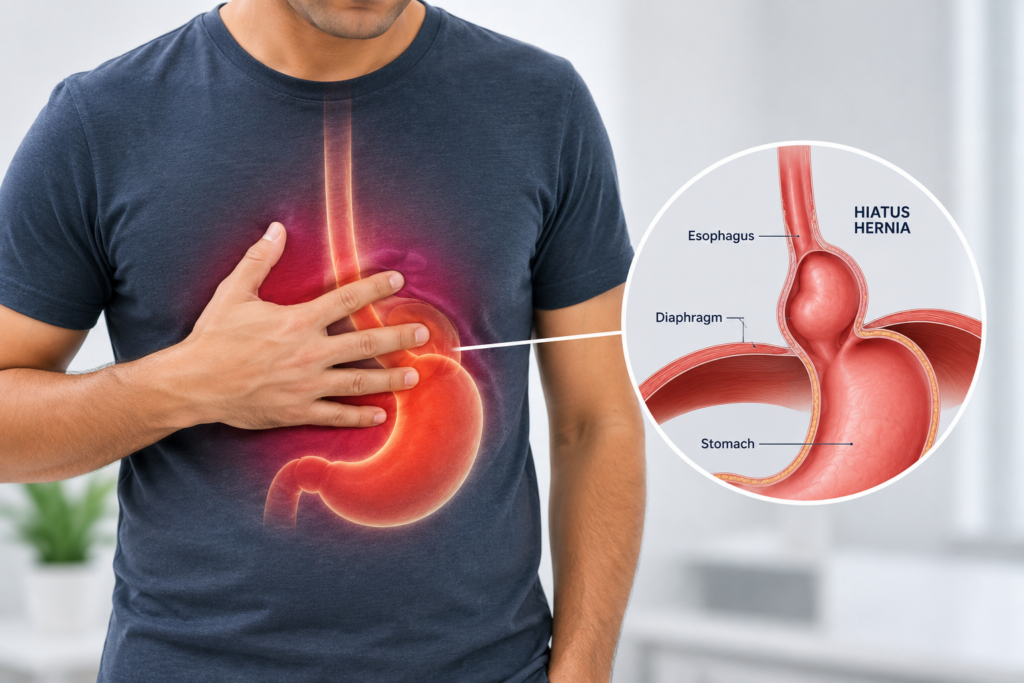
A hiatus hernia develops when a portion of the stomach moves upward through an opening in the diaphragm called the hiatus. This condition can interfere with the normal function of the food pipe and stomach, often leading to acid reflux, heartburn, chest discomfort, or difficulty swallowing. Although some people experience only mild symptoms, others may find that the condition gradually affects their daily activities and quality of life. Seeking evaluation from a Hiatus Hernia Specialist in Mumbai helps determine the severity of the condition and identify the most appropriate treatment approach.
Understanding Hiatus Hernia
The diaphragm is a thin muscle that separates the chest from the abdomen and plays an important role in breathing. The food pipe normally passes through a small opening in this muscle before joining the stomach. When the opening becomes wider or weaker, a part of the stomach can move into the chest cavity, resulting in a hiatus hernia.
Many people are unaware they have a hiatus hernia until symptoms become persistent. Some cases are diagnosed during investigations performed for acid reflux or upper abdominal discomfort.
The severity of symptoms often depends on the size of the hernia and whether stomach acid repeatedly flows back into the oesophagus.
What Causes a Hiatus Hernia?
Several factors may contribute to the development of a hiatus hernia. The condition becomes more common with increasing age as the supporting muscles gradually weaken.
Other possible causes include:
- Age-related weakening of the diaphragm
- Obesity
- Persistent coughing
- Heavy lifting over many years
- Pregnancy
- Increased pressure inside the abdomen
- Previous abdominal surgery
- Smoking
Although these factors increase the likelihood of developing a hiatus hernia, not everyone with these risk factors experiences symptoms.
Common Symptoms of Hiatus Hernia
Symptoms vary from person to person. Some individuals experience occasional discomfort, while others may develop persistent digestive symptoms.
Common symptoms include:
- Heartburn
- Acid reflux
- Regurgitation of food or acid
- Chest discomfort
- Difficulty swallowing
- Frequent burping
- Feeling full soon after eating
- Upper abdominal pain
- Chronic cough
- Hoarseness of voice
Persistent reflux should not be ignored because long-term acid exposure may affect the lining of the food pipe.
Types of Hiatus Hernia
Doctors generally classify hiatus hernias into two main categories.
Sliding Hiatus Hernia
This is the most common type. The junction between the oesophagus and stomach moves above the diaphragm, often causing acid reflux symptoms.
Paraesophageal Hiatus Hernia
In this less common type, part of the stomach moves beside the oesophagus while the junction remains in its normal position. Larger paraesophageal hernias may require surgical treatment because of the possibility of complications.
When Should You Seek Medical Advice?
Medical evaluation is recommended if symptoms continue despite lifestyle changes or medications.
You should seek medical advice if you experience:
- Frequent heartburn
- Difficulty swallowing
- Persistent chest discomfort
- Vomiting after meals
- Unexplained weight loss
- Severe abdominal pain
- Recurrent acid reflux
Early diagnosis allows doctors to identify the cause of symptoms and discuss suitable treatment options before complications develop.
Diagnosis of Hiatus Hernia
A detailed medical history and physical examination help guide further investigations.
Depending on your symptoms, your surgeon may recommend:
- Upper GI Endoscopy
- Barium Swallow Study
- CT Scan
- Esophageal Manometry
- 24-hour pH Monitoring
These investigations help determine the size of the hernia, evaluate acid reflux, and identify any changes in the oesophagus before deciding on treatment.
Treatment Options
Treatment depends on the severity of symptoms, the size of the hernia, and the patient’s overall health.
Lifestyle Changes and Medication
Many patients with mild symptoms benefit from simple lifestyle modifications combined with medication.
These may include:
- Eating smaller meals
- Avoiding lying down immediately after eating
- Maintaining a healthy weight
- Limiting spicy and fatty foods
- Reducing caffeine intake
- Stopping smoking
- Sleeping with the head elevated
These measures can significantly reduce acid reflux symptoms in many patients.
Surgical Treatment
When symptoms continue despite medication or when the hernia becomes large, surgery may be recommended.
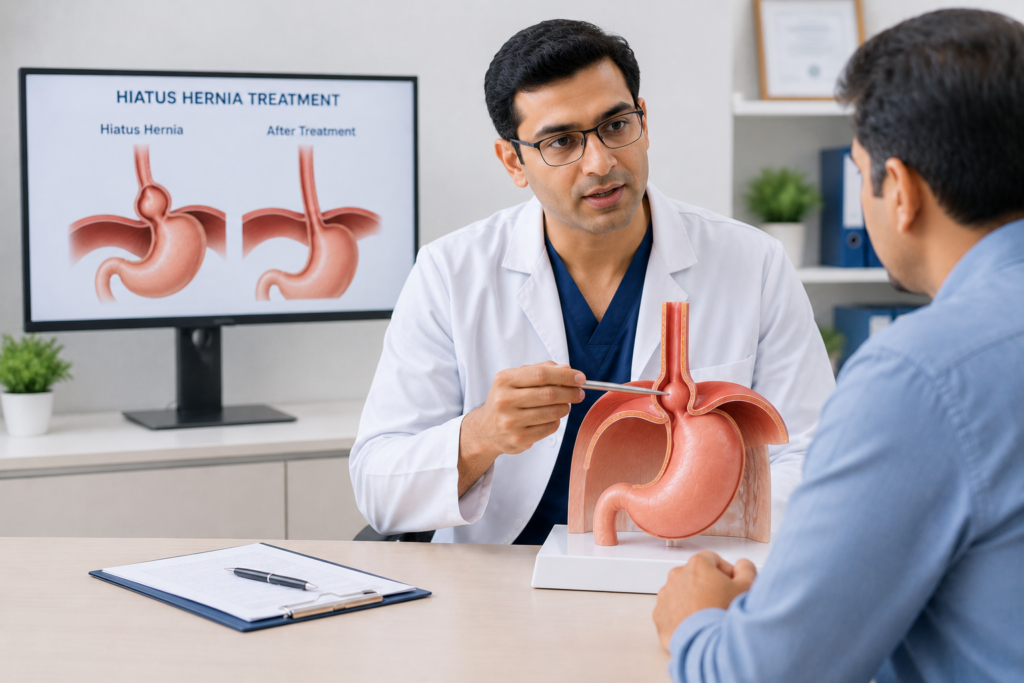
Hiatus Hernia Surgery In Mumbai is commonly performed using minimally invasive techniques. Small incisions, specialised instruments, and a high-definition camera allow surgeons to repair the diaphragm opening while reducing discomfort and supporting quicker recovery.
During surgery, the stomach is returned to its normal position, the opening in the diaphragm is repaired, and when required, an anti-reflux procedure is performed to reduce future acid reflux.
Benefits of Surgical Treatment
Modern minimally invasive surgery offers several advantages for suitable patients.
These may include:
- Smaller incisions
- Reduced postoperative discomfort
- Less blood loss
- Lower risk of wound complications
- Shorter hospital stay
- Earlier return to daily activities
- Better cosmetic outcome
- Long-term relief from reflux symptoms
The most appropriate treatment is decided after careful evaluation of each patient’s condition.
Recovery After Surgery
Most patients begin walking on the same day or the following day after surgery.
Recovery usually includes:
- Gradual return to a normal diet
- Light walking every day
- Avoiding heavy lifting for several weeks
- Regular follow-up visits
- Following dietary advice during healing
Gradual return to a normal diet
Light walking every day
Avoiding heavy lifting for several weeks
Regular follow-up visits
Following dietary advice during healing
Patients searching for the Best Doctors For Hiatal Hernia Treatment In Mumbai should choose surgeons experienced in both minimally invasive and advanced gastrointestinal surgery, ensuring treatment decisions are based on individual clinical needs.
Conclusion
Hiatus hernia is a manageable condition when diagnosed early and treated appropriately. Lifestyle changes may help control mild symptoms, while minimally invasive surgery offers an effective solution for larger or persistent hernias. Consulting a Hiatus Hernia Specialist in Mumbai allows timely evaluation, accurate diagnosis, and an individualized treatment plan based on the severity of the condition. Early care can help reduce symptoms, improve comfort, and support long-term digestive health.
Frequently Asked Questions
1. What is a hiatus hernia?
A hiatus hernia occurs when part of the stomach moves through the diaphragm into the chest cavity. It may cause acid reflux, heartburn, or difficulty swallowing, although some people have no symptoms.
2. When should I consult a doctor for a hiatus hernia?
Medical evaluation is recommended if you experience frequent acid reflux, chest discomfort, difficulty swallowing, or symptoms that continue despite medication or lifestyle changes.
3. Is surgery necessary for every hiatus hernia?
No. Small hernias with mild symptoms may be managed through lifestyle modifications and medication. Surgery is generally considered for persistent symptoms, larger hernias, or complications.
4. How long does recovery take after hiatus hernia surgery?
Most patients resume light daily activities within one to two weeks. Complete recovery depends on the type of surgery and individual healing.
5. Can a hiatus hernia return after surgery?
Although recurrence is uncommon, maintaining a healthy weight, avoiding heavy lifting during recovery, and following medical advice can help reduce the risk.