
Recurrent Hernia Specialist Mumbai
Home >Recurrent Hernia Specialist Mumbai
Recurrent Hernia Specialist Mumbai for Advanced Hernia Care and Treatment
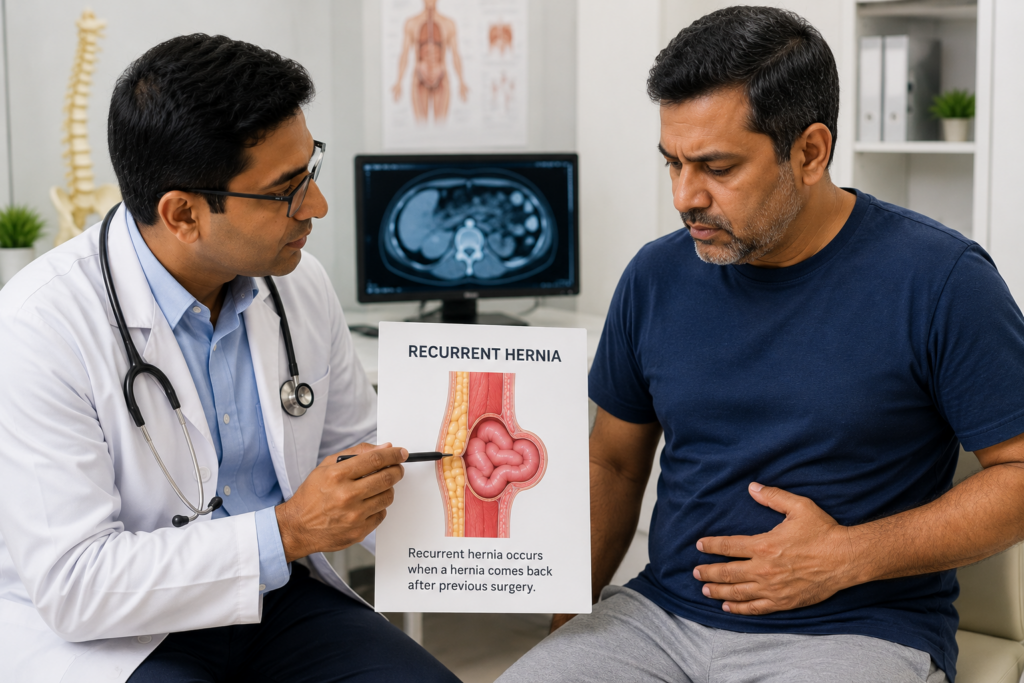
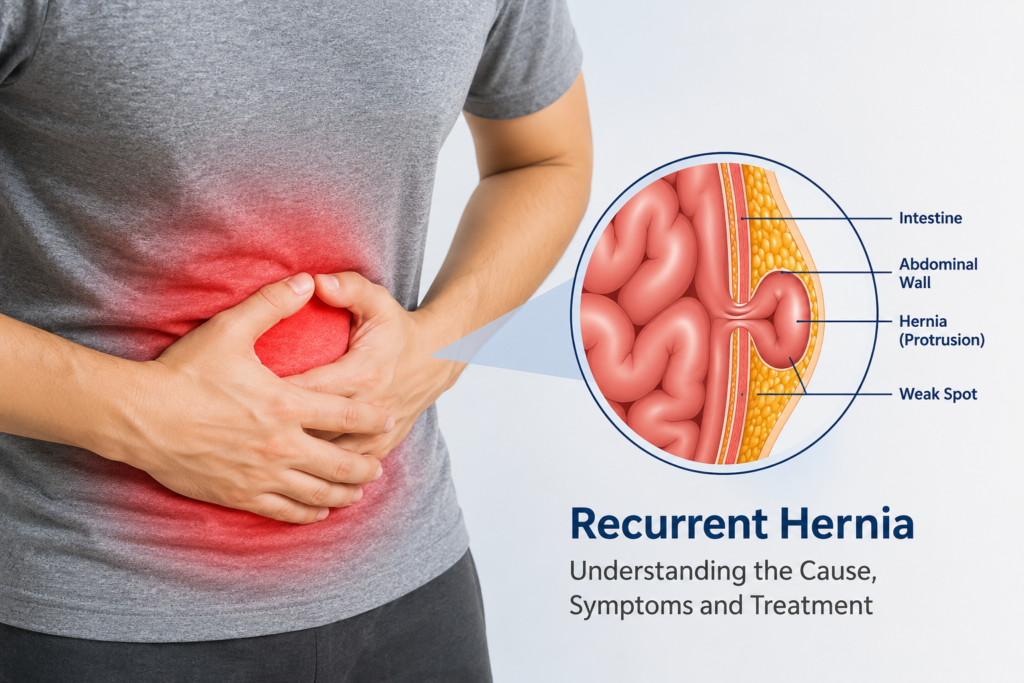
A recurrent hernia develops when a previously repaired hernia appears again in the same area. Although hernia surgery is generally successful, recurrence can occur due to several factors, including tissue weakness, infection, heavy physical activity, obesity, or increased pressure inside the abdomen. Early diagnosis and proper treatment are important to prevent complications and improve long-term outcomes.
If you have noticed a swelling or discomfort after a previous hernia operation, timely evaluation by a Recurrent Hernia Specialist Mumbai can help determine the cause and identify the most appropriate treatment approach. Every recurrent hernia is different, and careful planning is essential before deciding on surgery.
Understanding Recurrent Hernia
A recurrent hernia is not simply the return of a previous condition. Scar tissue from earlier surgery, changes in the abdominal wall, and the presence of surgical mesh can make repeat surgery more complex than the first procedure.
Recurrent hernias may develop months or even years after the initial repair. Some patients experience only mild discomfort, while others notice increasing pain, swelling, or difficulty carrying out routine activities. Early medical evaluation helps prevent the hernia from becoming larger or more difficult to repair.
Why Does a Hernia Return?
Several factors may increase the possibility of recurrence after hernia surgery. Understanding these causes helps both patients and surgeons plan appropriate treatment.
Common reasons include:
- Weak abdominal muscles
- Heavy lifting soon after surgery
- Chronic coughing
- Obesity
- Smoking
- Diabetes affecting wound healing
- Infection after previous surgery
- Large or complex hernias
- Natural weakness of connective tissues
Not every recurrence is related to the previous operation. Lifestyle factors and individual healing responses also play an important role.
Common Symptoms of a Recurrent Hernia
Symptoms often resemble those experienced before the first surgery.
They may include:
- A swelling near the previous surgical site
- Pain during lifting or exercise
- Pulling sensation in the abdomen
- Discomfort while standing for long periods
- Feeling of pressure in the groin or abdominal wall
- Swelling that becomes more noticeable while coughing
Some recurrent hernias remain painless initially, making routine evaluation important if a lump develops after earlier hernia surgery.
Diagnosis and Evaluation
Proper diagnosis helps determine the size, location, and complexity of the recurrent hernia.
Physical Examination
The surgeon evaluates the swelling while the patient is standing, coughing, and lying down. Previous surgical scars and abdominal wall strength are also assessed.
Imaging Tests
Ultrasound or CT scans may be recommended to understand the exact location of the hernia, evaluate existing mesh, and identify any complications before planning surgery.
A detailed assessment helps create an individualized treatment plan for each patient.
Treatment Options
Treatment depends on the type of recurrent hernia, previous surgery, patient health, and abdominal wall condition.
Robotic Hernia Repair
Robotic surgery allows precise movements using advanced surgical instruments controlled entirely by the surgeon. Better visualization helps during complex recurrent hernia repairs where scar tissue may be present.
Laparoscopic Hernia Repair
Hernia Surgery in Mumbai may also be performed using laparoscopic techniques in suitable patients. Small incisions, reduced postoperative discomfort, and shorter hospital stays are among the advantages of minimally invasive surgery.
Open Hernia Repair
Certain large or complicated recurrent hernias may require open surgery. The approach is selected after evaluating the patient’s medical condition and previous operations.
Recovery After Surgery
Recovery varies depending on the complexity of the repair and the surgical technique used.
Patients are generally encouraged to:
- Walk soon after surgery
- Avoid lifting heavy weights during recovery
- Maintain a healthy body weight
- Eat a balanced, protein-rich diet
- Attend scheduled follow-up visits
- Follow activity guidelines provided by the surgeon
Most patients gradually return to normal activities over the following weeks, although complete healing may take longer in complex cases.
Why Choosing the Right Specialist Matters
Revision hernia surgery often requires careful planning because of previous scar tissue, existing mesh, and altered anatomy. An experienced Hernia Specialist in Mumbai evaluates every aspect of the condition before recommending the most appropriate surgical approach.
Careful assessment, modern imaging, individualized planning, and minimally invasive techniques help improve safety and support long-term outcomes while reducing the chances of another recurrence.
Patients should also discuss lifestyle modifications, weight management, and activity restrictions that may help protect the abdominal wall after surgery.
Conclusion
A recurrent hernia can affect comfort, mobility, and everyday activities, but timely evaluation helps prevent further complications. Consulting a Recurrent Hernia Specialist Mumbai allows for detailed assessment and treatment planning based on the type of hernia, previous surgical history, and overall health. Modern surgical techniques and personalized care play an important role in achieving durable repair and supporting a smooth recovery. Regular follow-up and healthy lifestyle habits also contribute to long-term success after hernia surgery.
Frequently Asked Questions
What is a recurrent hernia?
A recurrent hernia is a hernia that returns after a previous surgical repair. It may develop months or years later due to tissue weakness, healing issues, or increased pressure on the abdominal wall.
What symptoms indicate that a hernia has returned?
Common symptoms include a swelling near the previous surgical site, pain while lifting objects, discomfort during physical activity, or a feeling of pressure in the affected area. Medical evaluation helps confirm the diagnosis.
Can a recurrent hernia be treated with minimally invasive surgery?
Yes. Depending on the patient’s condition, robotic or laparoscopic surgery may be suitable. The choice of procedure depends on the size of the hernia, previous surgeries, and overall health.
How can I reduce the risk of another hernia recurrence?
Following your surgeon’s recovery advice, avoiding heavy lifting during healing, maintaining a healthy weight, managing chronic cough, and stopping smoking can help reduce the risk of recurrence.
When should I seek medical advice for a recurrent hernia?
If you notice a new swelling, increasing pain, or discomfort near a previous hernia repair, it is advisable to seek medical evaluation promptly. Early diagnosis allows timely treatment and may help prevent complications.