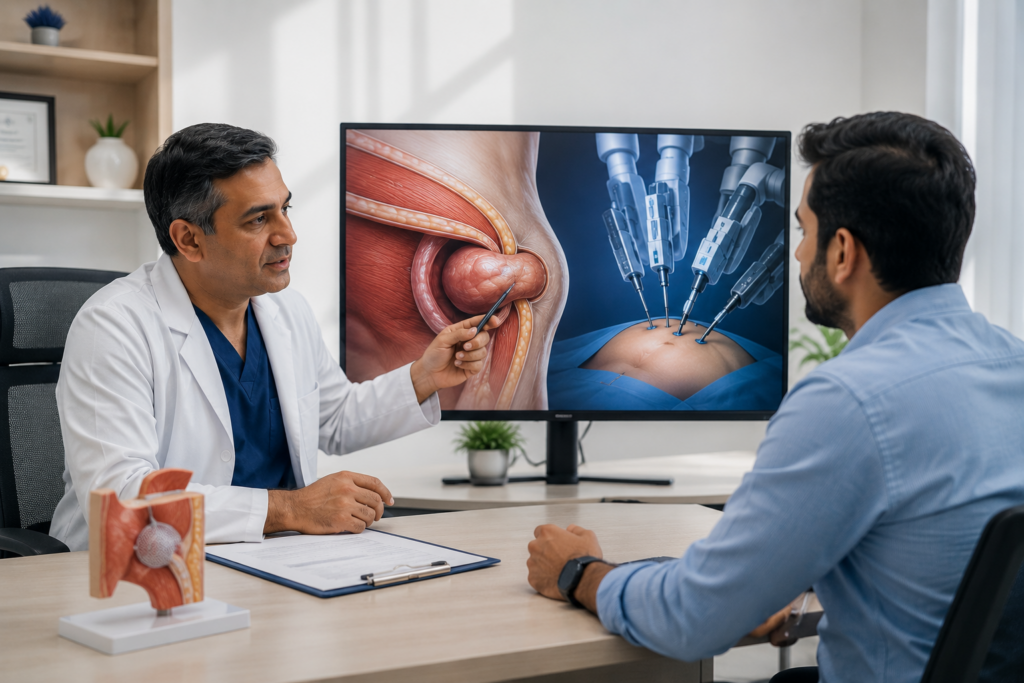
Robotic Hernia Surgery in Mumbai

Home > Robotic Hernia Surgery in Mumbai

Robotic Hernia Surgery in Mumbai for Safe and Precise Treatment

A hernia develops when an internal organ or fatty tissue pushes through a weak area in the surrounding muscles or connective tissue. While some hernias remain small for years, others gradually increase in size and may cause discomfort during daily activities. Ignoring symptoms can sometimes lead to complications, making timely medical evaluation important. Robotic Hernia Surgery in Mumbai has become a modern treatment option for suitable patients, combining advanced technology with minimally invasive surgical techniques to support accurate repair and a smoother recovery.

What Is a Hernia?

A hernia can develop in different parts of the body, but it most commonly affects the abdomen or groin. It may appear as a visible bulge that becomes more noticeable while coughing, lifting heavy objects, or standing for long periods. Some people experience pain, heaviness, or pressure, while others may notice only mild discomfort.

Common types of hernias include:

Inguinal Hernia?

An inguinal hernia occurs in the groin area and is one of the most frequently diagnosed types. It is more common in men but can also occur in women. Symptoms often include a swelling in the groin and discomfort during physical activity.
Robotic Hernia Surgery in Mumbai performed using advanced minimally invasive technology

Umbilical Hernia

This type develops near the belly button. It can affect both adults and children and may become more noticeable when abdominal pressure increases.

Umbilical Hernia

An incisional hernia may develop at the site of a previous abdominal surgery where the muscle wall has weakened over time. Proper surgical repair helps restore strength to the abdominal wall.

Hiatal Hernia

A hiatal hernia occurs when part of the stomach moves through the diaphragm into the chest cavity. It may cause acid reflux, heartburn, chest discomfort, or difficulty swallowing.

Why Robotic Surgery Is Becoming a Preferred Option

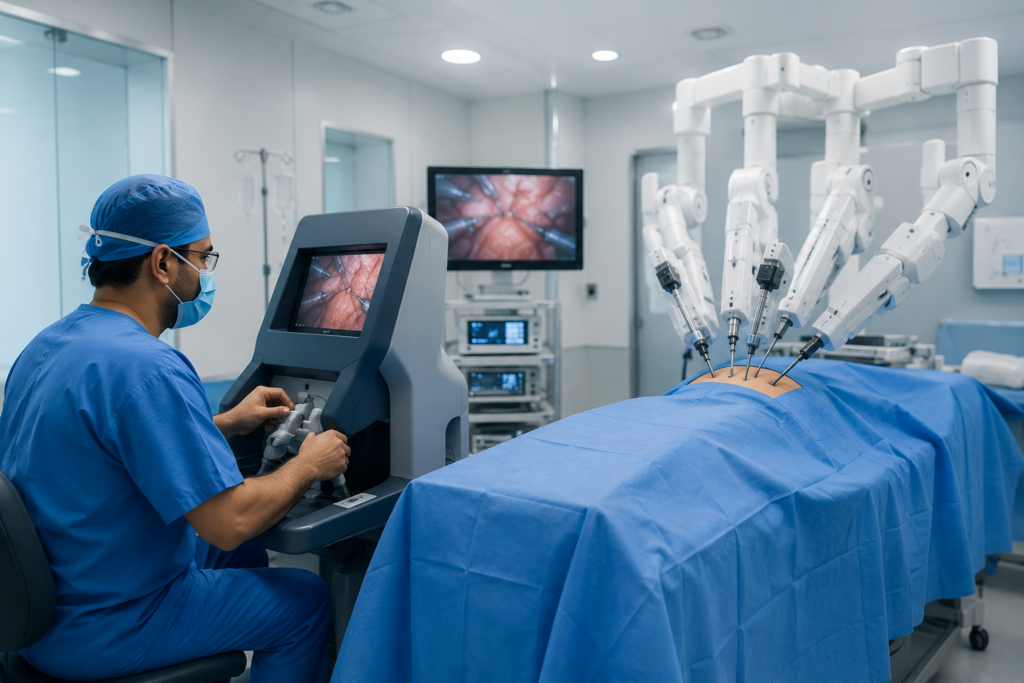
Medical technology has changed significantly over the past decade, allowing surgeons to perform complex procedures with greater precision. During Robotic Hernia Surgery in Mumbai, the surgeon controls robotic instruments through a specialized console. The robotic system does not operate independently; every movement is directed by the surgeon, allowing excellent control and high-definition visualization throughout the procedure.
Compared with traditional open surgery, robotic-assisted surgery generally involves smaller incisions, less blood loss, reduced postoperative discomfort, and faster return to normal activities for many patients. The improved visualization also allows surgeons to work carefully around delicate tissues, which is especially helpful in complex or recurrent hernia repairs.

Another advantage is the flexibility of robotic instruments. Their range of motion allows precise movements in areas that may be difficult to reach with conventional instruments, helping achieve an effective and durable repair.

Benefits of Robotic Hernia Surgery

Robotic surgery has become an important advancement in minimally invasive surgery because it combines surgical expertise with advanced technology. Patients undergoing robotic hernia repair may experience several advantages depending on their condition and overall health.
Some of the commonly observed benefits include:
  • Smaller surgical incisions
  • Reduced blood loss during surgery
  • Better precision while repairing the hernia
  • Less discomfort after the procedure
  • Lower risk of wound-related complications
  • Shorter hospital stay in many cases
  • Faster return to normal daily activities
  • Better visualization of the surgical area
Every patient is different, and the recovery experience may vary based on the type of hernia and individual health factors.

Who May Need Hernia Surgery?

Not every hernia requires immediate surgery, but medical evaluation becomes important when symptoms begin affecting daily life or when the hernia continues to increase in size.
You may benefit from surgical treatment if you experience:
  • A visible swelling in the groin or abdomen
  • Pain while lifting heavy objects
  • Persistent discomfort during walking or exercise
  • A hernia that cannot be pushed back
  • Recurrent hernia after previous surgery
  • Symptoms affecting work or routine activities
After clinical examination and imaging, the surgeon recommends the most suitable treatment based on the size, location, and complexity of the hernia.
Robotic Hernia Surgery in Mumbai performed using advanced minimally invasive technology

Robotic and Laparoscopic Hernia Surgery

Both robotic and minimally invasive techniques aim to repair the hernia through small incisions while reducing trauma to surrounding tissues.

Laparoscopic Hernia Surgery in Mumbai remains a suitable option for many uncomplicated hernias, while robotic surgery offers additional flexibility, improved instrument movement, and high-definition three-dimensional visualization. The choice of procedure depends on factors such as previous abdominal surgeries, recurrent hernias, body structure, and the complexity of the repair.

The treatment plan is always individualized after a complete medical evaluation.

What Happens During the Procedure?

Before surgery, patients undergo a detailed assessment, including medical history, physical examination, and necessary investigations.
During robotic hernia surgery:
  • General anesthesia is administered.
  • Small incisions are created.
  • A tiny camera provides a magnified view of the surgical field.
  • Robotic instruments are used to repair the weak abdominal wall.
  • Surgical mesh may be placed when appropriate to strengthen the repair.
  • The incisions are closed carefully after completing the procedure.
Throughout the operation, the robotic system is completely controlled by the surgeon and does not function independently.

Recovery After Surgery

Recovery is an important part of successful hernia treatment. Most patients are encouraged to begin walking soon after surgery, as early movement supports circulation and healing.
Recovery usually includes:
  • Pain management as advised by the surgeon
  • Walking regularly
  • Avoiding heavy lifting for a few weeks
  • Maintaining a healthy diet
  • Attending scheduled follow-up visits
Most people gradually return to work and routine activities based on the type of surgery and their recovery progress.

Patients receiving treatment from a qualified Hernia Surgeon in Mumbai receive individualized recovery instructions to support safe healing and reduce the likelihood of recurrence.

Conclusion

Hernia treatment has advanced considerably with the introduction of minimally invasive and robotic surgical techniques. These approaches allow accurate repair while supporting faster recovery and improved patient comfort. Robotic Hernia Surgery in Mumbai is an effective option for many patients with primary, recurrent, or complex hernias, depending on their clinical condition. Early evaluation, accurate diagnosis, and an individualized treatment plan play an important role in achieving successful long-term outcomes.

Frequently Asked Questions

1. What are the early signs of a hernia?
A hernia may appear as a bulge in the abdomen or groin, along with pain, heaviness, or discomfort during coughing, lifting, or standing for long periods. Early medical evaluation helps determine the appropriate treatment.
Not always. The choice of surgery depends on the type of hernia, previous operations, overall health, and clinical findings. Your surgeon recommends the most appropriate approach after evaluation.
Many patients return to light daily activities within a few days, while complete recovery varies depending on the complexity of the repair and individual healing.
Although modern surgical techniques reduce the risk of recurrence, factors such as obesity, heavy lifting, smoking, chronic cough, or poor wound healing may increase the possibility. Following post-operative instructions supports better long-term results.
If you notice a swelling, persistent pain, increasing discomfort, or difficulty carrying out daily activities, timely evaluation is recommended. Early treatment can help prevent complications and support smoother recovery.
Scroll to Top